


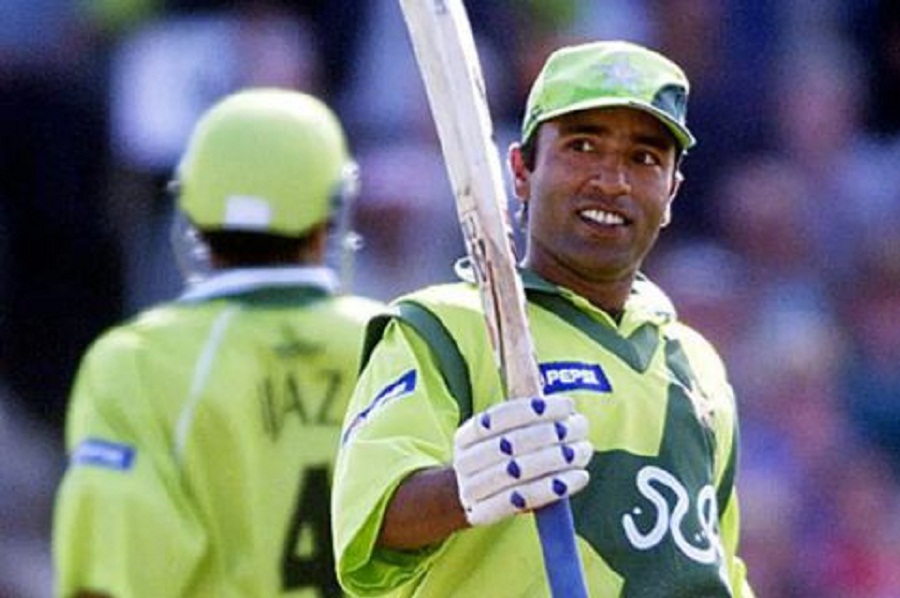
A boy stood beside his father at a tea stall near the Doyaganj bazaar, eyes fixed on a small television perched on a wooden shelf, its screen flickering, the aerial adjusted a dozen times to catch the signal. The kettle hissed. Nobody cared. A man wearing a light green jersey had just walked out to open the innings, bat tucked under his arm, cap low, and for the next few hours nothing else in that little corner of the world seemed to matter. That man was Saeed Anwar, and that boy was one of thousands like him scattered across cities that had nothing to do with Pakistan, yet everything to do with the game he played.


Smartphones did not arrive; no one knew what streaming was; cricket lived in the small gatherings, a tea stall, a shop with a rented television, a neighbour’s living or bedroom.
In the narrow lanes around Dayaganj Bazar in Old Dhaka, in the crowded evenings of Wari and Narinda, people would huddle together in the evening, watching a left-hander from Karachi turn batting into something closer to calligraphy.
It didn’t matter that the match was being
It didn’t matter that the match was being played on the sandy ground of Sharjah or under Australian lights half a world away. The connection was immediate, almost personal.
His batting had a certain aggression without becoming technically inaccurate. It was right and on-spot with flair.
From how he took the stance, one could guess how the bat would kiss the ball, and the bat came down like it knew exactly where it wanted to go.
His cover drives had a rhythm that felt
His cover drives had a rhythm that felt closer to music than to sport, no wasted movement, no unnecessary aggression, just timing so pure that the ball seemed to leave his bat before you realised he had even played the shot.
Fans who grew up watching him still talk about that stillness before the strike, the split-second pause that separated a good batsman from a poet with a bat.
And then there was the pairing with Shahid Afridi. Two very different men, two very different games, Anwar’s calm artistry against Afridi’s raw, explosive hitting, yet together they turned Pakistan’s opening overs into appointment viewing.
When they walked out together, conversations paused mid-sentence
When they walked out together, conversations paused mid-sentence. Shops didn’t bother pretending to do business. It was theatre, and everyone knew the show didn’t last long, so nobody wanted to blink.
His innings against India carried a different weight altogether.
In an era when an India-Pakistan match could empty streets and fill courtyards, Anwar seemed to raise his game further, playing knocks that are still replayed in grainy YouTube clips today, dissected frame by frame by fans who weren’t even born when the deliveries were bowled.
His famous 194 knock against India remains one of the defining innings of that decade, a reminder of how good Pakistani batting could look when it had rhythm on its side.
More than two decades after he walked away
More than two decades after he walked away from the game, something strange keeps happening. Cricket has moved on to faster bats, bigger sixes, and shorter formats, yet people still search for ‘someone like Saeed Anwar.’ They rarely find him. Because what Anwar offered wasn’t just runs; it was a feeling. A particular kind of elegance that modern batting, for all its power, has quietly left behind.
Maybe that’s why the tea stalls, the bazars, the rooftop gatherings of that era still feel so vivid.
Maybe that’s why fathers far from Sharjah, Dubai, Melbourne, or Karachi, living anywhere in Bangladesh, still tell their sons about a certain evening, a certain match, or a certain shot through cover that seemed so beautiful. Cricket gave many great batters. It gave the world, for a while, poetry with a bat. So the question isn’t really whether people miss Saeed Anwar. It’s whether they ever really got over him.
Source: thefinancialexpress.com.bd
