

‘Fielding culture is never a finished product’ – T Dilip
byVijay Tagore•
T Dilip was associated with the Indian men’s team for over four years© Getty
T Dilip was associated with the Indian men’s team for over four years©Getty
Under T Dilip, Indian fielding ranged from extraordinary to not so extraordinary. Some catches, like Suryakumar Yadav’s in the 2024 final and Axar Patel’s in the 2026 semifinal, helped India win the World Cups and produced some of the most breathtaking moments in Indian cricket. There were also some straightforward spills that attracted scrutiny.
The fielding coach, who was associated with the Indian team for over four years, looks back on his tenure and explains why a proper analysis of a missed catch should not end with the words ‘catch dropped’.
Do you leave the Indian team feeling
Do you leave the Indian team feeling that you were able to build the fielding culture you wanted, or are there things you wish you had been able to change?
I leave with a great deal of satisfaction, although I would never say the work was complete. A fielding culture is not something one coach arrives and builds alone. It develops through the captain, the head coach, the support staff and most importantly, the players accepting that fielding can influence selection and win matches. There were periods when we fielded exceptionally well. The players began taking pride in saving runs, backing up and maintaining intensity apart from spectacular catches. Even the ‘Fielding Medal’ became valuable because the players gave it value.
Were there things I would have liked to improve further? Definitely. But I think that is true of anything meaningful in life. You should never reach a point where you feel completely satisfied and say ‘there is nothing more to learn or improve’. As a coach, you are always looking at what else can be added, how the preparation can become more specific and how every player can contribute a little more consistently to the group. If the players continue discussing fielding, appreciating the small efforts, challenging one another and taking pride in that part of the game, I will feel extremely proud that I was able to play my part in building that culture.
You were part of a team that placed
You were part of a team that placed enormous emphasis on fielding and created a strong fielding culture. What do you think changed towards the end of your tenure?
That awareness within the group was something very special. Towards the end, I would not say that the culture suddenly changed. I would say the team itself was entering a period of transition. The personnel changed, leadership evolved, roles changed and several younger players came into the setup. Whenever a group changes, some combinations naturally have to be developed again. A stable slip cordon, for example, develops through time together.
The fielders gradually understand the bowlers’ angles, how much the wicketkeeper moves, whether the ball is carrying at knee height or around the waist, and even how the person beside them reacts. That understanding cannot be created in one or two sessions; it grows through shared match experience. A fielding culture is never a finished product. It has to keep evolving with the players who enter the dressing room, and every new generation has the opportunity to take that culture forward in its own way.
Two different head coaches and four different captains — how has the experience been?
Honestly, I consider myself extremely fortunate because working
Honestly, I consider myself extremely fortunate because working with different head coaches and captains gave me an opportunity to learn from several different people. Every human being is different, so naturally every leader will have a different personality, a different way of communicating and a particular philosophy that he wants to take forward. As a fielding coach, it is important to first understand that philosophy. You cannot enter with a fixed approach and expect every captain or head coach to adjust to you.
You have to understand what they expect from the team, what kind of fielding identity they want to create and then see how your work can support that vision. My outlook was always very simple. Whether it was Rahul bhai (Rahul Dravid), Gauti bhai (Gautam Gambhir) or any of the captains I worked with, they gave me a great deal of freedom and trusted me to do my job. I will always remain grateful to all of them for that.
What would you call the high points of fielding in your tenure?
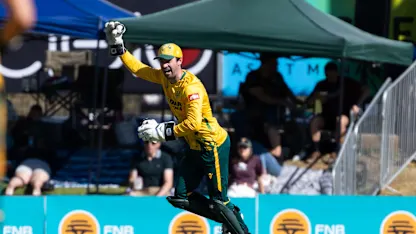
There were many special moments, so it is difficult to select only one or two. But Suryakumar Yadav’s catch in the 2024 T20 World Cup final and Axar Patel’s backward-running catch in the 2026 World Cup semi-final against England will always remain very close to my heart. Both came on enormous occasions, under pressure, and both showed the awareness, courage and presence of mind required at that level.
For me, perhaps the biggest high point
For me, perhaps the biggest high point was seeing fielding become part of the team’s everyday conversation. Players began noticing and appreciating the smaller efforts of their teammates. When that appreciation starts coming from within the group, you feel that fielding is no longer only the responsibility of the fielding coach, it has become part of the team’s culture.

‘Suryakumar Yadav’s catch in the 2024 T20 World Cup final and Axar Patel’s backward-running catch in the 2026 World Cup semi-final against England will always remain very close to my heart’©Getty
Surya became almost a symbol of the fielding standards India aspired to. What did his catch in the 2024 T20 World Cup final tell you about the ceiling of this group when everything came together?
That moment showed what this group was capable
That moment showed what this group was capable of when preparation, skill and presence of mind all came together. Everybody remembers the catch, but there were actually several decisions Surya had to make within a few seconds. First, he had to read the trajectory immediately and cover the distance. Then he had to remain aware of the boundary, take the catch, release the ball before crossing the rope and return to complete it. The situation was enormous, but there was no panic in any of those actions.
For me, that decision-making was the most impressive part. We had practised that kind of boundary catch many times. Of course, you cannot reproduce the final over of a World Cup during training, the crowd, the occasion; what was at stake can never be recreated. But you can make the movement familiar. When the body has experienced a similar situation repeatedly, the player has greater clarity when the real moment arrives. Ultimately, though, the credit belongs completely to Surya. A coach can prepare a player for different possibilities, but in that moment, with the World Cup on the line, it was his awareness, courage and execution that completed the catch.
Can you actually replicate the pressure of a Test-match slip catch or a World Cup boundary catch in training?
That’s why repetition is extremely important, because
That’s why repetition is extremely important, because it makes the movement familiar to the player. But it has to be quality repetition. Taking fifty catches without concentration is not necessarily better than taking fifteen catches with a clear purpose and complete involvement. Can we recreate the exact pressure of a Test match or a World Cup final? Honestly, no. You cannot reproduce the crowd, the scoreboard or the knowledge that one moment may decide a trophy. That emotional pressure belongs only to the match.
We can introduce competition, points, time restrictions and situations in which the player does not know exactly where the next ball is going. That forces him to observe, react and make decisions while feeling some pressure, in addition I try to expose them into these situations in pre and post-match drills.
Surya’s catch in the 2024 final is a good example. He had practised that type of boundary situation many times, but never with a World Cup depending on it. Training could not reproduce the occasion, it could make the movement familiar enough for him to remain clear when the occasion arrived. That is the real purpose of repetition. You are not trying to manufacture the final in practice, you are preparing the player so that the skill does not feel unfamiliar when he reaches the final.
How important was it for you to get the bowlers to buy into fielding?
Honestly, one of the things I take pride
Honestly, one of the things I take pride in from my tenure is the way our bowlers embraced fielding. People naturally speak about the recognised fielders in a team, but the effort put in by our bowling group was outstanding. We must understand what a fast bowler’s body goes through. He may have bowled a long spell, covered several kilometres during the day and still be expected to dive, chase a ball to the boundary or complete an accurate throw. Despite that workload, our bowlers never treated fielding as somebody else’s responsibility. They wanted to improve, participated fully and took a lot of pride in contributing to the team in the field.
“Whether it was Rahul bhai (Rahul Dravid), Gauti bhai (Gautam Gambhir) or any of the captains I worked with, they gave me a great deal of freedom and trusted me to do my job”
India’s catching standards during the recent tours of the UK and Zimbabwe came under considerable scrutiny. What can you say?
The first thing every cricket fan should understand is that nobody wants to drop a catch. It is probably one of the worst feelings a player can experience on the field. The cameras may move on to the next delivery, but the player must remain in that position carrying the disappointment with him. He knows what that opportunity could mean to the bowler, the team and the result. So, believe me, nobody will feel worse about it than the player himself. Of course, when catches go down, they must be reviewed honestly. But proper analysis cannot stop with the words ‘catch dropped’.
Every chance has a different degree of difficulty
Every chance has a different degree of difficulty. We examine where the fielder started, how early he picked up the trajectory, whether his first movement was correct, how much distance he covered, whether his head was stable at the point of contact and whether the hands were in the right position. Sometimes the hands receive the blame for a mistake that began with the feet two seconds earlier. There is also a broader pattern worth examining. The catching efficiency in the IPL has also dropped significantly. That tells us the conversation is not limited to one Indian tour or one group of players. The speed of the game, increasingly difficult catching opportunities, travel and workload may all be contributing factors.
There were dropped catches across positions and formats. Did you identify a common reason behind the decline, or were these different technical and mental issues depending on the player?
In my opinion, India’s catching across positions and formats was of a very good standard. The group produced some exceptional performances in the field, often under considerable pressure. At the same time, there were periods when catches went down, and I would never shy away from acknowledging that. As a fielding coach, however, I do not wait for a difficult match or a poor series before I begin analysing. That process is continuous.
Even after an excellent fielding performance, I am
Even after an excellent fielding performance, I am reviewing what we did well, what could have been better and whether our preparation remains appropriate for the next conditions and opposition. Analysis should not begin only when something goes wrong. I also do not believe there was one common reason behind every dropped catch.
A player’s entire game is connected. If he is short of runs or wickets, carrying a bowling workload, coming back from injury or trying to establish his place, that can sometimes occupy the mind and affect the freedom with which he fields. There may also be fatigue, a change of position, unfamiliar conditions, lack of exposure at international level, some technical aspects or a temporary loss of confidence. That is why my first responsibility was always to understand the individual before suggesting a solution.
Was there ever a point when the volume of cricket, travel and workload made it increasingly difficult to give fielding the preparation it needed?
The volume of cricket certainly made preparation more
The volume of cricket certainly made preparation more challenging, but it also encouraged us to become more precise and intelligent with our planning. At international level, more training is not always better training. The important question is what a particular player needs on that particular day. Fielding skills require regular contact, but every session does not have to be physically demanding. Sometimes a short, focused session containing twenty high-quality repetitions can be more valuable than fifty repetitions completed with a tired body.
Catching is as much about confidence and mindset as technique. Once a player starts carrying the memory of dropped catches, how do you break that cycle? Yashasvi Jaiswal in England is a case in point.
Catching confidence can be delicate, but it can also return very quickly. One clean catch at the right time can completely change what a player is feeling. The first responsibility of a coach is to ensure that the player does not feel defined by a few mistakes.
When catches go down in succession, I would
When catches go down in succession, I would not immediately give the player a hundred more difficult catches. He is already thinking about the mistake, and too much correction can put even more information into his mind. First, I would have a quiet conversation with him, understand what he felt and separate the emotional part from any technical issue.
Then we return to simple, achievable repetitions. The idea is to help the player feel the ball entering his hands cleanly again. Once that rhythm returns, we gradually add movement, variation, speed and pressure. Confidence is not rebuilt only by saying, “Be confident”; the player needs to experience successful execution again, and at times change positions for a brief period.
With someone like Yashasvi, it is important to remember the complete picture. He had already taken some outstanding catches and worked very hard on his close catching. A difficult match or series does not suddenly remove that ability.
Part 2 of this interview, landing on Monday, covers the technical side of fielding, the role of data and repetition, and the impact of modern T20 cricket.
Source: www.cricbuzz.com